
UPS 101: How a UPS Works
Did you know 70% of data loss incidents in Singapore’s tech sector stem from sudden electricity cuts? Such disruptions cost firms millions each year, underscoring the urgent need for reliable backup. Enter the UPS—a silent guardian that bridges power gaps in milliseconds when outages strike.
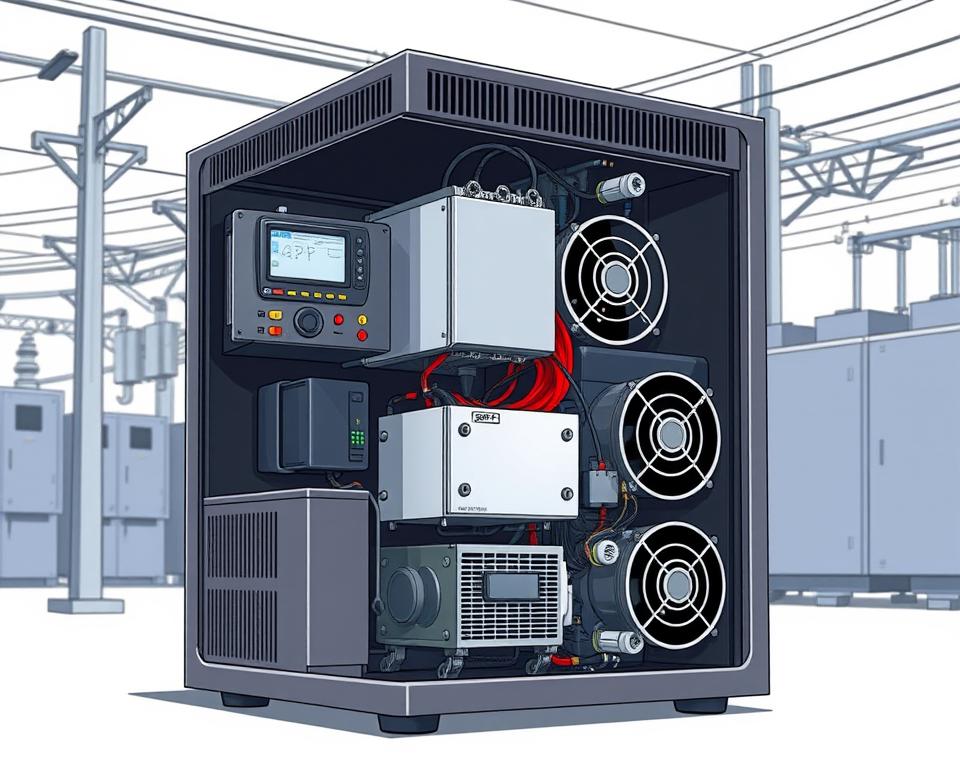
Unlike traditional generators, which take seconds to activate, these systems use batteries or supercapacitors to deliver instant https://citecinternational.com.sg/computational-fluid-dynamics/ protection. The near-instant response protects sensitive electronics, so they’re essential for servers, medical devices, and comms networks. Modern designs integrate rectifiers, inverters, and intelligent controls to keep voltage stable during disturbances.
UPS technology scales from home offices to data centers with ease. Small units protect one workstation; industrial-grade systems back up entire sites. Despite their importance, many users misunderstand their capabilities—like assuming they’re only for emergencies. In reality, they continuously filter power irregularities before they reach connected devices.
Quick Takeaways
- Immediate backup mitigates outage-driven data loss
- Battery/capacitor systems react faster than generators
- Rectifiers, inverters, and controls stabilize the power flow
- Scalable solutions protect individual devices or entire buildings
- Active power conditioning occurs even during normal operation
Introduction to Uninterruptible Power Supply Systems
What keeps critical hospital machines on during a blackout? Critical infrastructure across Singapore relies on specialized systems that act like digital bodyguards. These units prevent catastrophic failures in sectors where milliseconds matter—from emergency rooms to stock trading floors.
Fundamentally, UPS solutions shield sensitive electronics from grid instability. Beyond emergencies, they daily filter surges/sags that slowly wear down equipment. In data centers, even a brief flicker can wipe weeks of effort. For telecom networks, such events can disrupt emergency services.
Modern UPSs range from compact (200VA) router guardians to industrial systems supporting skyscrapers. Key features often include:
- Immediate battery engagement on outage
- On-the-fly voltage regulation
- Mobile-app remote monitoring
Singapore’s tech-driven economy demands this protection. Jurong server farms can’t risk downtime, and Ang Mo Kio clinics need steady backup power for ventilators. Some advanced models forecast battery wear to schedule preemptive replacements.
What Is an Uninterruptible Power Supply (UPS)?
You’re on a deadline; lights flicker—yet your screen stays on, courtesy of a silent protector. Think of a UPS as a digital airbag using https://citecinternational.com.sg/uninterruptible-power-supply/ to cushion devices and keep them running during outages. These systems combine energy storage with real-time monitoring to maintain stable operations.
Three core elements drive UPS effectiveness. The battery supplies instant energy and regulators smooth inconsistencies. Filters intercept harmful spikes upstream of connected devices. It’s a 24/7, multi-layer defense, even with a seemingly stable grid.
| Feature | Response Time | Voltage Window | Use Case |
|---|---|---|---|
| Basic Battery Backup | 5-10 ms | about ±15% | Home routers |
| Advanced Voltage Control | 2-4 ms | about ±5% | Medical equipment |
| Industrial-Grade UPS | Instant | about ±2% | Data centres |
If the grid fails, UPS units engage within milliseconds. Singapore’s tropical storms test systems daily—a 2023 study showed UPS-equipped offices suffered 89% fewer hardware failures. Not just for blackouts—brownouts and micro-outages are neutralized as well.
Many designs provide app alerts as battery health dips. Some models even prioritize which devices get power first during extended outages. That adaptability makes them essential from Changi Airport systems to neighborhood clinics.
How a UPS Protects Sensitive Equipment
Businesses in Singapore report 73% fewer hardware replacements—here’s why. They use multiple safeguards to counter threats beyond basic surge protector capability. From Jurong’s server farms to Ang Mo Kio medical labs, equipment stays operational through storms and grid hiccups.
| Threat | Mitigation | Outcome |
|---|---|---|
| Spikes | Multi-stage suppression | 89% fewer component failures |
| Frequency Shifts | Automatic voltage regulation | Output held within ±2% |
| EMI/RFI noise | EMI/RFI filtering | ~95% interference blocked |
| Voltage sags | Instant battery takeover | Zero downtime transitions |
Integrated sensors sample irregularities 500× per second. When voltage sags—common in monsoon season—the UPS compensates within ~2 ms. This prevents gradual damage to circuit boards that often goes unnoticed until failure.
They isolate devices from ground loops—frequent culprits of data corruption in ups networked setups. With these systems, hospitals see ~68% fewer false equipment alarms. The protection extends beyond emergencies—daily power fluctuations get neutralized before reaching sensitive gear.
Common Power Problems Tackled by UPS Units
How often do Singaporean businesses face hidden electrical threats that degrade equipment silently? Despite headline outages, 82% of equipment damage is due to subtle voltage issues. Modern UPS units fight these invisible enemies daily, keeping operations stable across Jurong factories to Ang Mo Kio clinics.
A major culprit, harmonic distortion, gets special mitigation. Heavy-machinery waveforms can be irregular, overheating motors. They regenerate clean sine waves, helping avoid premature failures.
In monsoon months, voltage sags rise by about 150% in Singapore. Smart systems detect drops within 2ms, boosting output to safe levels. This instant response keeps MRI machines and servers running smoothly despite grid instability.
Overview of UPS Technologies and Types
Modern UPS designs are tailored to specific needs in distinct architectures. Three primary technologies dominate, each balancing cost with performance. We’ll cover two common options widely used across Singapore.
Standby/Offline UPS Basics
These entry-level UPSs work like digital watchdogs. During normal operation, devices remain on utility power. When voltage deviates excessively, it switches to battery within about 5–10 ms.
Key features include:
- Basic surge protection against spikes
- Small form factor suits routers and POS
- Lower initial cost versus advanced models
Features of Line-Interactive UPS
An upgrade that includes smart voltage regulation. Its autotransformer corrects minor fluctuations without tapping battery. Brownouts are handled ~40% more efficiently than with standby units.
| Metric | Offline/Standby | Line-Interactive |
|---|---|---|
| Response Time | ~5–10 ms | 2-4 ms |
| Voltage Window | about ±15% | about ±5% |
| Typical Use | Home office | Medical labs |
| Battery Use | High during sags | Optimised via transformer |
Tech shops in Singapore report ~63% longer battery life with line-interactive units. Because unnecessary switching drops, they’re ideal for clinics with temperature-sensitive vaccines.
Online (Double-Conversion) UPS: An In-Depth Look
Why do Singapore’s top hospitals trust a specific type of backup system for life-support machines? Online double-conversion UPS units operate like digital fortresses, constantly purifying electricity through AC-to-DC-to-AC conversion. The process removes any gap between grid failure and battery activation—critical for MRI scanners and server clusters.
Connected devices never see raw grid power. Instead, they will:
- Convert incoming AC to DC using heavy-duty rectifiers
- Filter harmonics and voltage spikes out
- Invert DC back to clean AC using precision inverters
To hit 99.999% uptime, Jurong data centres rely on this approach. Unlike standby UPSs, transfer delay is zero—batteries remain linked to inverters 24/7. Enhanced cooling addresses Singapore humidity, preventing overheating in prolonged outages.
| Aspect | Standard | Double-Conversion |
|---|---|---|
| Transfer Time | 2-10 ms | 0 ms |
| Waveform | Modified-sine | Pure sine |
| Isolation | Partial | Complete |
Though ~40% pricier than line-interactive, they prevent micro-outage damage in semiconductor tools. Ang Mo Kio research labs report 92% fewer equipment reboots since upgrading—proof that seamless protection justifies the investment.
Hybrid UPS and Energy Efficiency
A national push for greener tech in Singapore is driving smarter energy solutions. Hybrid designs combine high-efficiency standby with full double-conversion protection. Automatic selection of mode is based on real-time grid status.
During stable power supply, hybrid units function like standby UPS systems. Energy waste can drop by up to 98% versus always-on double-conversion. Key benefits include:
- Electricity costs down 15–20% for data centres
- Battery lifespan extended using intelligent cycling
- Instant shift to full protection when voltage sags
| Feature | Standby | Hybrid UPS | Double-Conversion |
|---|---|---|---|
| Efficiency | ~92% | 97% | 88% |
| Protection Level | Basic | Advanced | Maximum |
| Typical Users | Home offices | Hospitals | Semiconductor fabs |
Monsoon conditions highlight “double conversion on demand”. Beyond ±10% fluctuation, it switches to full isolation within about 2 ms. Jurong server farms report ~18% energy savings with no uptime compromise.
Smart sensors check battery health and grid stability at 500 Hz. Dual-mode operation is ideal for clinics seeking efficiency and robust life-support protection.
UPS Alternatives: Ferroresonant and Rotary
How do industrial facilities maintain operations during Singapore’s frequent voltage fluctuations? A ferroresonant UPS offers a unique method. Similar to standby, they rely on specialized transformers to store energy. This design bridges brief power gaps without draining batteries, ideal for protecting precision tools in Jurong’s manufacturing hubs.
How Rotary UPS Systems Work
Rotary systems replace traditional batteries with kinetic energy storage. A spinning flywheel generates electricity during outages, providing up to 30 seconds of runtime. That’s ideal for Singapore data centres needing short backup during generator start.
Key advantages include:
- Battery replacements reduced by ~90% versus standard units
- Fast response to load shifts in demanding environments
- Reduced maintenance costs for facilities with frequent brownouts
Ang Mo Kio fabs use these systems to protect delicate etchers. A flywheel lifespan of ~25 years beats traditional battery banks, lowering long-term costs. During monsoon season, this technology prevents micro-outages from disrupting production lines.
Modern rotary designs integrate with smart grids, adjusting energy storage based on real-time power quality. This helps Singapore hospitals keep critical care gear running through voltage sags, ensuring uninterrupted monitoring.