
The core function of a Pressure Water Regulator is to hold household and garden water pressure within a controlled range. By controlling pressure, it supports pipes and fixtures while reducing water waste. Most home systems are set around 40–60 psi, while many units arrive preset at about 45–55 psi. When inlet pressure from a municipal supply reaches 40–90 psi, a Main Water Pressure Regulator may be needed to stay within code limits and preserve plumbing components.
Pressure Regulator For House
A Pressure Regulator For House should usually be installed where the supply line serves the home, downstream of the main shutoff and commonly near a check valve and filter. Many House Water Pressure Regulator models offer a built-in strainer and pressure gauge so checks are fast. Adjustment is manageable: shut off supply, relieve pressure, loosen the locknut, turn the adjustment knob to set the desired psi, restore supply, and verify with a gauge.
A Water Pressure Regulator is essential for irrigation and drip systems because it reduces inlet pressure to match emitter requirements and reduces the risk of blowouts. In more complex systems, make sure the unit meets minimum flow requirements and consider a pressure limit valve to preserve steady outlet pressure. If the regulator struggles to adjust or maintain steady pressure, it is time for servicing.
Key Takeaways
- A Pressure Water Regulator helps protect pipes, fixtures, and appliances by keeping pressure in the 40–60 psi range.
- Place the Main Water Pressure Regulator beyond the main shutoff and after any filter or check valve.
- Many regulators arrive factory-adjusted around 45–55 psi and include a gauge plus strainer for convenient inspection.
- Garden systems work best when regulator GPM capacity matches demand, especially when a pressure limit valve is used for multi-zone layouts.
- Routine checks include relieving pressure, adjusting the knob, testing with a gauge, tightening the locknut, and inspecting for leaks.
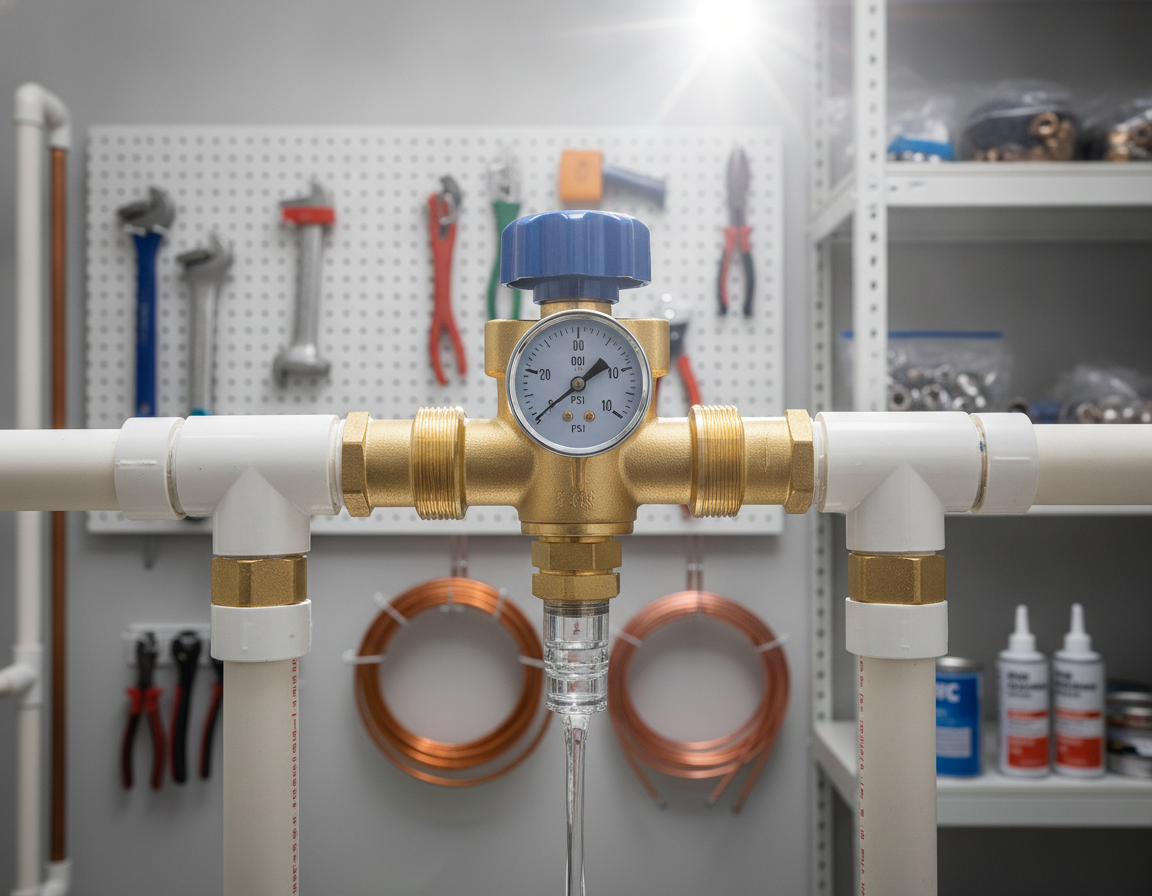
Understanding Water Pressure Regulators: What They Are And Why Your Home May Need One
A Pressure Water Regulator is a practical device that keeps incoming water pressure at a steady level for a home. It is also known as a PRV, pressure regulator valve, or Water Regulator Valve. Manufacturers such as Watts and Honeywell, along with many plumbers, often use these terms in specifications, manuals, and installation instructions.
A standard Pressure Regulator Valve usually contains a flexible diaphragm, spring, seat, and t-stem. Incoming water pressure presses on the diaphragm, and the spring counteracts the pressure. As flow demand or inlet pressure changes, the t-stem changes the seat opening to help keep outlet pressure stable.
Most homes aim for 40–60 psi at fixtures. Plumbing codes, including the International Plumbing Code, commonly place upper household pressure limits near 80 psi to protect pipes and appliances. When municipal inlet pressure surpasses local limits, or when pressure spikes occur near the meter, a Water Pressure Reducing Valve is often recommended.
A Water Pressure Regulator can lower strain on copper pipe, PVC lines, valves, and fixtures. By keeping pressure lower and steadier, it can reduce leak-related water waste and slow wear on appliances such as water heaters, dishwashers, and washing machines. Drip systems and irrigation zones perform better when outlet pressure is matched to the needs of emitters, tubing, rotors, or sprays.
Water regulators are available in pre-set and adjustable designs. Most models specify minimum flow, maximum flow, and the operating range needed for proper regulation. For irrigation, match outlet pressure to components: drip emitters and micro-sprays need much lower pressures than rotors or foggers. Clean or adjust a regulator when performance falters; replace it if it cannot hold a stable setting.
Where To Place And How To Size A Pressure Regulator For House And Irrigation Systems
Choosing the right device means considering both location and flow requirements. A Main Water Pressure Regulator should be installed where the service line enters the building. Depending on the property, that location may be a basement. The typical setup includes a main shutoff valve, check valve, filter, and then the pressure device. Placing the regulator after filtration limits debris buildup and may extend service life.
Pressure Regulators may be installed near the main shutoff, close to the water meter, or ahead of irrigation timers and controllers. In irrigation layouts, the regulator is usually best placed after filtration and before control valves, timers, or zone devices. This helps drip emitters receive consistent pressure. Where space is limited, use an accessible spot so future testing, adjustment, and gauge connection remain easy.
Sizing should be based on water use, not only on pipe size. For irrigation, total the emitter output in GPH, then convert that figure to GPM for regulator selection. Whole house systems need higher GPM capacity to support appliances, fixtures, and outdoor use at the same time. If the regulator’s minimum flow exceeds the system flow, it may fail to regulate effectively and pressure can climb.
Before buying, review each unit’s stated flow range. Smaller regulators may cover 0.5–7 GPM, mid-range options may support 5–18 GPM, and heavy-duty units may reach about 70 GPM for larger properties. The best Pressure Regulator For House should handle peak demand while remaining rated for local inlet pressure conditions.
Choose between a standard pressure regulator valve and a Pressure Limit Valve based on the zone layout. A pressure limit valve is ideal when flow stops because it maintains pressure close to the set point. Standard regulators are often better downstream near each zone or fixture where minimum flow is very low.
Thread types and connection sizes are critical for a clean installation. Common fittings include 3/4″ hose-thread, 3/4″ pipe, 1″, 1-1/4″, 1-1/2″, and 2″ pipe threads. Many regulators include a gauge port or hose-thread boss so pressure checks are simple. Look for integrated strainers, built-in filters, and brass bodies to reduce clogging and corrosion.
As you compare models, review certifications and local code requirements. A Main Water Pressure Regulator rated for local inlet pressures protects plumbing and appliances. Units with a visible gauge and removable strainer make routine maintenance, pressure checks, and quick troubleshooting easier.
Installation, Tuning, And Maintenance Tips For Optimal Performance
To keep a system reliable, start with careful planning and continue with routine maintenance. A good installation starts with a detailed plan and quality parts from trusted suppliers. This guide outlines essential installation, adjustment, and maintenance steps. These practices help maintain consistent Water Regulator Pressure and long-term reliability.
Pre-Installation Checklist And Suggested Location
Place the regulator downstream of the main shut-off and after coarse filtration. For standard Water Regulator Valves, install it before downstream valves or timers. Confirm that the regulator meets your system’s minimum flow requirement. Look for a built-in gauge, strainer, or test port before installation begins. If not, plan for a separate gauge or port from Installation Parts Supply.
Step-By-Step Installation Overview
Start by shutting off the main supply, then open a faucet to release pressure. Make sure the regulator is oriented correctly according to the manufacturer’s flow arrow. Use the correct thread adapters for each connection. Apply thread sealant or tape as instructed and tighten fittings to the recommended torque.
Restore supply gradually and check each connection for leaks. Test multiple fixtures to confirm consistent Water Regulator Pressure. When the regulator lacks a built-in gauge, connect a hose-bib gauge to a test point so the pressure can be verified.
How To Tune A Water Pressure Regulator Safely
Before making adjustments, always release system pressure. Loosen the locknut on the adjustment stem and turn the knob in small increments. To increase pressure, turn clockwise; to decrease it, turn counterclockwise. Monitor a reliable gauge during adjustments and test several outlets for consistent pressure.
Once the desired pressure is reached, tighten the locknut and check again for leaks. If readings keep changing or the regulator cannot hold its setting, stop making further adjustments. Consult a licensed plumber or consider replacement parts from Installation Parts Supply.
Ongoing Maintenance And Expected Service Life
Inspect the regulator regularly for leaks, corrosion, and loose fittings. Use a hose-bib gauge to test pressure, and if fluctuations appear, compare readings across several days. Clean or replace integrated strainers as recommended by the manufacturer.
Many regulators last roughly 10–15 years under normal conditions. A unit with ongoing corrosion, unstable pressure, or mechanical failure should usually be replaced. Keep spare gauges, seals, and fittings from Installation Parts Supply available for easier repairs and less downtime.
Frequent Issues, Troubleshooting, And When To Get Professional Help
When a Pressure Water Regulator begins to fail, you may notice sudden pressure swings, hammering pipes, or gradual psi changes. Homeowners may also see corrosion, leaks around fittings, or an inability to maintain a stable setting on a Water Pressure Regulator. These symptoms often point to worn internal parts or debris-clogged screens.
Simple checks can often resolve issues before professional help is needed. Attach a gauge to an outside hose bib or water heater outlet to verify downstream pressure. Make sure the main shutoff and zone valves are fully open. Also confirm that irrigation zones meet the minimum flow required for the Pressure Regulator Valve to work properly.
If your regulator has an integrated strainer, shut off supply pressure and clean or replace the screen to remove grit and sediment. Test the unit after reassembly. Low flow through a House Water Pressure Regulator can cause pressure to climb when fixtures close. For multi-zone irrigation, evaluate whether a Water Pressure Reducing Valve or a pressure limit valve better suits the layout.
When adjustments do not change readings, or the unit will not hold the set pressure, replacement is usually required. Persistent humming, hammering, or sudden pressure spikes may indicate a failed diaphragm or spring. Age also matters; regulators older than 10–15 years often need replacement even when leaking is not obvious.
Safety starts with relieving system pressure before servicing any Pressure Water Regulator. Many local plumbing codes require a PRV when inlet pressure exceeds code limits. The International Plumbing Code recommends keeping household pressure below about 80 psi. For complex problems, disassembly-based adjustments, or code compliance concerns, hire a licensed plumber for diagnosis and safe replacement of a Pressure Regulator Valve or House Water Pressure Regulator.
Final Thoughts
When properly installed, a Pressure Water Regulator can keep home water pressure near the recommended 40–60 psi range. This protects pipes, fixtures, and appliances while saving water. Regular gauge checks and small seasonal adjustments are important. Regular leak inspections can also improve regulator performance and extend its useful life.
For irrigation and drip systems, choose a regulator that matches flow and outlet pressure needs. Place it after the filter and timers when practical. For multi-zone systems, placing a pressure limit valve before control valves can help maintain steady operation. Make sure the device meets minimum flow requirements to avoid erratic pressure.
Most Whole House Pressure Regulator units are designed to be set-and-forget and may last 10–15 years. Even so, monthly monitoring and yearly inspections are wise. Replace any Water Pressure Regulator that fails to adjust, cannot maintain pressure, or shows damage. Always consult a licensed plumber for code questions or persistent problems.
Using quality parts and compatible replacements from trusted suppliers improves reliability and maintenance ease. With the right regulator, correct sizing, and basic upkeep, home and garden plumbing can operate more efficiently and last longer.
Related: The Best in Douglasville Georgia Pressure Washing Services